eCylinder Upgrades for Miami Beach Condo Associations
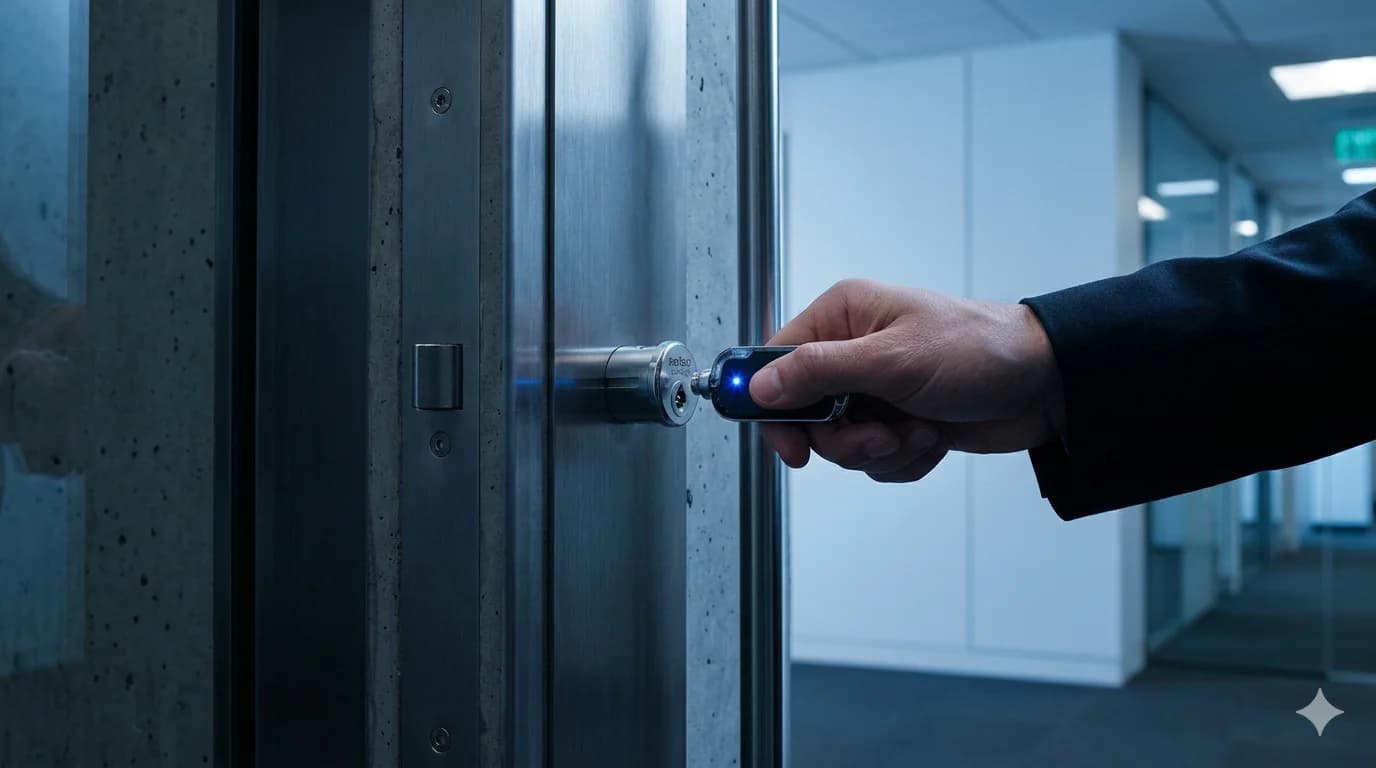
eCylinder upgrades for Miami Beach condo associations and property managers. Replace traditional master key systems with auditable, remotely managed electronic cylinders for better access control.
eCylinder Upgrades for Miami Beach Condo Associations
Every spring, Miami Beach condo associations go through the same transition. Snowbird residents have departed, short-term rental turnover spikes, and property managers are left managing a building that has had dozens of keys circulating through it for six months of peak season. Contractors came and went. Seasonal staff were hired and let go. Rental guests received physical keys that were never fully accounted for.
This is exactly when condo boards and property managers start asking the same question: who actually has access to this building right now?
For Miami Beach condo associations looking at that question seriously, eCylinder upgrades are increasingly the answer. This guide covers what eCylinders are, where they fit within an existing condo security setup, and how a phased upgrade works for a mid-size to large Miami Beach building.
What eCylinders Are and How They Work
An eCylinder is a physical lock cylinder that contains an embedded electronic component. It installs the same way a traditional mechanical cylinder does, into existing door hardware, without requiring a full door prep or hardware replacement. From the outside, it looks like a standard cylinder.
The difference is in how it operates:
- Keys contain a small electronic credential (a chip or RFID component) that communicates with the cylinder
- The cylinder validates the credential before allowing the key to turn
- If a key is reported lost or an employee is terminated, that specific credential is disabled through the management software, without rekeying the physical cylinder
- Every key use is logged with a timestamp, giving property managers a complete audit trail
The mechanical override is preserved. If a key needs to work during a power interruption or system failure, eCylinders maintain that capability. The electronic layer adds to the security; it does not replace the mechanical foundation.
Why Miami Beach Condo Buildings Specifically Need This
Miami Beach properties face a combination of access control pressures that are more intense than most other residential markets in Miami-Dade.
Short-term rental turnover. Buildings in Flamingo/Lummus, Sunset Harbour, and South Beach corridors that allow short-term rentals have guest turnover rates that make traditional key accountability nearly impossible. Physical keys issued to rental guests get duplicated, kept, or lost. There is no practical way to rekey after every guest departure. eCylinders with time-limited credentials solve this: a guest's key credential expires automatically at checkout.
Seasonal staffing cycles. Buildings that scale up staff for snowbird season and then reduce headcount in spring are left with a key inventory problem. Traditional systems require physically collecting every key and rekeying anything that was not returned. With eCylinders, a property manager deactivates credentials for departed staff from a software dashboard. No physical rekey required.
Contractor access. The post-snowbird season maintenance push, HVAC servicing, pool resurfacing, lobby renovation, brings waves of contractors into service areas, mechanical rooms, and common spaces. Issuing those contractors a master key or area key with no expiration date is how buildings end up with unaccountable access years later. eCylinder systems issue contractor credentials with hard expiration dates built in.
Liability exposure. Recent lawsuits against Miami Beach residential complexes have put property managers and condo boards on notice that inadequate access control carries real financial and legal risk. An eCylinder audit trail, showing exactly who accessed what door and when, is a form of documentation that traditional key systems cannot provide.
Where eCylinders Fit in a Condo Building
eCylinders are not the right solution for every door in a building, and most Miami Beach condo properties should plan a hybrid approach rather than a full replacement.
High-value targets for eCylinder installation:
- Mechanical and electrical rooms
- Rooftop access doors
- Pool and amenity areas with scheduled access windows
- Parking level entry and service doors
- Mail and package rooms
- Management office and records storage
- Elevator machine rooms
- Service corridors and freight entrances
Where traditional mechanical locks typically remain:
- Individual resident unit doors (most Miami Beach condos use electronic access or smart locks at the unit level, not mechanical cylinders)
- Resident storage lockers (lower access frequency, managed separately)
- Interior administrative doors with low-security requirements
The pattern that works for most mid-size Miami Beach buildings is: eCylinders on all shared service and mechanical access points, electronic smart locks or mobile credentials for resident-facing doors, and a master key system for emergency building-wide access by the property manager.
The Case for Upgrading After Snowbird Season
Post-snowbird season is structurally the best time for a condo association to run an access audit and execute an eCylinder upgrade. Occupancy drops, contractor schedules open up, and the building is in transition anyway. The disruption of an upgrade blends into the normal operational pause.
More practically, this is when the consequences of the prior season become visible. A property manager who runs a key audit in April or May often finds:
- Keys issued to seasonal staff that were not returned
- Contractor keys that were supposed to be temporary but were never collected
- Unit owner keys that were duplicated without authorization and are still unaccounted for
- A master key log that does not match current reality
Addressing this with a full rekey of every affected cylinder is expensive and disruptive. Addressing it with an eCylinder upgrade converts the one-time cost into a permanent capability: the ability to manage access without ever physically rekeying again after initial installation.
What a Phased eCylinder Rollout Looks Like
For a typical Miami Beach condo building with 100 to 400 units, a phased rollout is more practical than replacing every cylinder at once.
Phase 1: Access Audit and System Design
Before any hardware is ordered or installed, a locksmith completes a full door-by-door audit of the building. This maps:
- Every door that currently requires a key or credential
- Which key in the building's master system opens which doors
- Which staff, contractors, and owners currently hold keys
- Which cylinders are worn, damaged, or would benefit from immediate replacement regardless of the eCylinder decision
The audit produces a zone map and an access matrix showing which roles need which access. This is the foundation for the eCylinder system design.
Phase 2: Priority Area Installation
Install eCylinders first on the highest-risk access points: mechanical rooms, electrical rooms, rooftop, and service corridors. These are the areas where unaccountable access carries the most risk and where contractor access is most frequent. This phase can typically be completed in one to two business days for most Miami Beach buildings.
Phase 3: Common Area and Amenity Installation
Expand to pool, gym, package room, and shared amenity spaces. These areas benefit from time-based access scheduling, so a cleaning crew credential is only active during scheduled cleaning hours, and a contractor credential only works during the approved work window.
Phase 4: Key Control Transition
Issue new eCylinder-compatible keys to all current staff, property managers, and authorized contractors. Collect and retire all legacy keys. Document the transition in the building's key log. Set credential expiration schedules for roles with predictable turnover cycles.
Phase 5: Ongoing Management
After rollout, eCylinder management becomes a software task rather than a physical one. A new maintenance tech gets a credential assigned. A contractor finishes a job and the credential is deactivated. A staff member leaves and access is revoked before the exit interview ends. Quarterly audits verify that credentials in the system match current personnel.
Hardware Selection Considerations for Miami Beach Properties
South Florida's humidity and salt air environment affects electronic hardware the same way it affects mechanical hardware. For Miami Beach condo properties, eCylinder selection should account for:
- IP rating: Cylinders installed on exterior-facing doors need adequate ingress protection ratings for humidity and moisture exposure. This is not optional in a coastal Miami Beach environment.
- Communication method: Some eCylinder systems use wireless communication for audit log transmission; others require periodic physical download. Wireless systems add convenience but require network infrastructure planning.
- Battery life and replacement cycle: Most eCylinders are battery-powered. In a large building, coordinating battery replacement across dozens of cylinders needs a maintenance schedule built into the property management calendar.
- Integration with existing systems: Some Miami Beach buildings already have electronic access control on resident-facing doors. Selecting an eCylinder platform that integrates with the existing access control software simplifies management.
What This Costs and How to Frame It for the Board
The honest answer is that eCylinder hardware costs more per door than a traditional mechanical cylinder. A traditional cylinder replacement runs $50 to $150 per door installed. An eCylinder typically runs $200 to $400 per door installed, depending on the hardware platform and building volume.
The way to frame this for a condo board is not as a security expense but as an operational cost reduction over time. A traditional system requires physical rekeying every time key accountability breaks down. In a Miami Beach condo with active contractor access and seasonal staff turnover, that can mean several rekey events per year across multiple doors. At $75 to $150 per cylinder per rekey, a building with 20 service-area cylinders that gets rekeyed twice a year is already spending $3,000 to $6,000 annually just to maintain basic key accountability.
eCylinders eliminate that recurring cost. After initial installation, credential management is software-based and does not require a locksmith visit for routine access changes.
Add the liability dimension. A condo board that can produce timestamped access logs showing exactly who entered a mechanical room or service corridor has a fundamentally different legal posture than one that cannot account for who held which key.
Getting Started
York Lock and Key provides eCylinder assessments for Miami Beach condo associations, including full building audits, zone and access matrix design, hardware recommendations matched to South Florida's coastal environment, and phased installation planning that minimizes disruption to residents and ongoing building operations.
We have served South Florida since 1937 and are ALOA (Associated Locksmiths of America) members.
If your building is coming out of snowbird season with unresolved key accountability questions, this is the right time to address them before the next season begins.
Contact us to schedule an eCylinder assessment for your Miami Beach condo association.
Need Help With Your Security?
Contact York Lock & Key for professional solutions tailored to your needs.
Get in Touch