Aventura Condo Key Systems
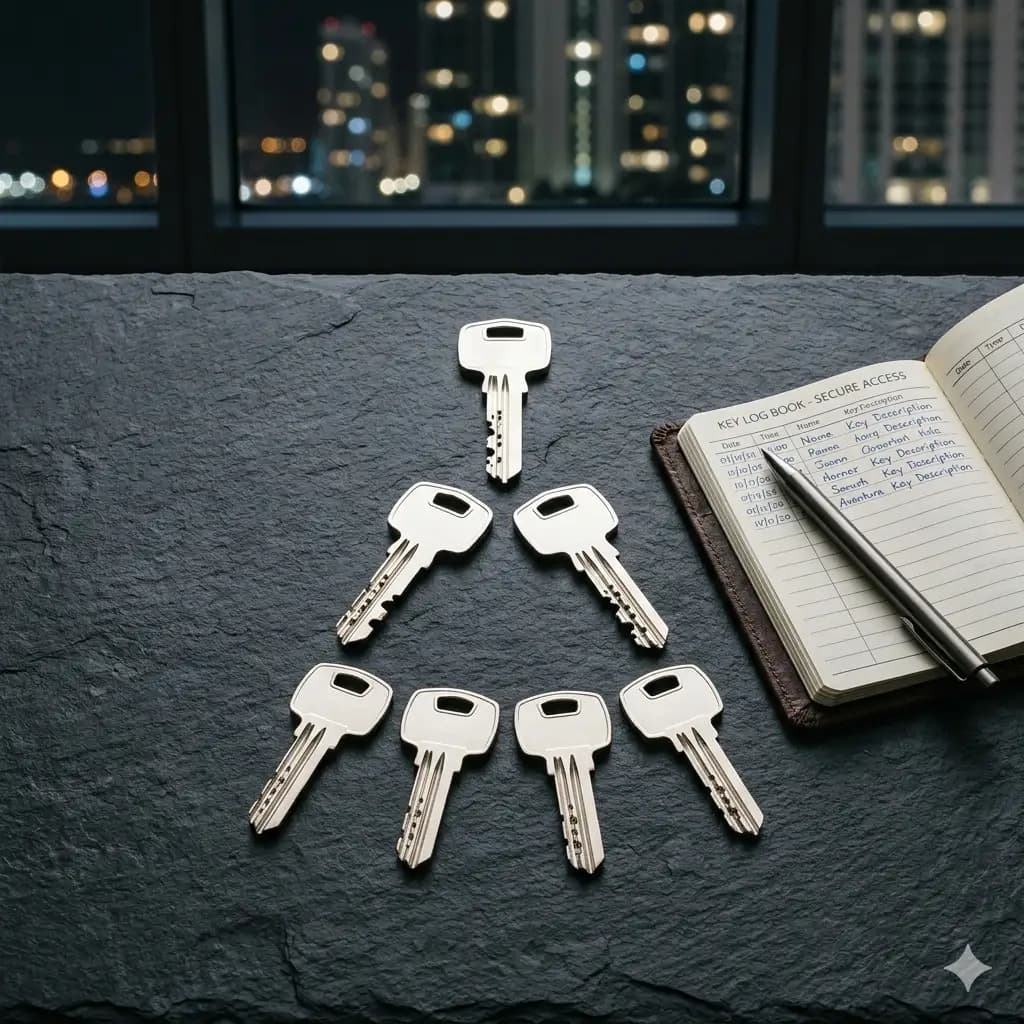
Master key systems and high-security lock upgrades for Aventura's large luxury condo towers. Key control, e-cylinders, and rekeying for Williams Island, Porto Vita, and Aventura's high-rise communities.
Aventura Condo Key Systems
Aventura's residential towers are among the largest luxury condo properties in South Florida. Williams Island, Porto Vita, Turnberry Ocean Club, The Waterways, and the towers surrounding Aventura Mall have hundreds of units each, extensive amenity campuses, large parking structures, and full-time property management staff. At this scale, key system design is an engineering challenge — not just a hardware question.
This guide covers master key systems, high-security hardware, and key control for Aventura's large-format luxury condo market.
Why Key Systems Are Complex at Aventura's Scale
A 500-unit Aventura condo tower has far more physical access points than most property managers think about:
- 500+ individual unit doors
- Multiple parking levels with separate access points
- Mechanical rooms (HVAC, electrical, plumbing — often one per zone or per floor)
- Amenity spaces (gym, pool, spa, tennis courts, club room, business center)
- Service corridors and back-of-house areas
- Rooftop access
- Marina and dock gates (for waterfront buildings)
- Package rooms, mail areas, trash and recycling rooms
- Individual storage unit doors
- Security office and guard booth
The key system has to give the right people access to the right places — without giving everyone access to everything, and without the property manager needing to carry 200 keys.
Master Key Hierarchy for Large Aventura Towers
A well-designed master key system for an Aventura high-rise uses a four-level hierarchy:
``` Grand Master Key (Property Manager only — stored in safe) → Emergency access to every door on property → Used only in genuine emergencies → Maximum 2 copies; log-controlled
Building Submaster Keys (Department Heads) ├─ Operations Submaster (Assistant Manager) │ → All common areas, resident corridors, amenities │ → Does NOT include mechanical areas │ ├─ Maintenance Submaster (Chief Engineer) │ → All mechanical, electrical, HVAC rooms │ → Service corridors and utility areas │ → Does NOT include resident units or amenities │ └─ Security Submaster (Security Director) → Lobby, guard booth, security office → Common area access for incident response → Does NOT include resident units
Department Area Keys (Staff by Role) ├─ Residential Floor Key (one per floor section) │ → Housekeeping supervisors for their section │ → Opens all units on assigned floors │ ├─ Mechanical Zone Keys (one per system) │ → Individual HVAC tech, plumber, electrician │ → Their system only; not other mechanical areas │ ├─ Amenity Keys (by amenity) │ → Gym attendant, pool staff, club room attendant │ → Their area only │ └─ Service Area Keys → Package room, trash rooms, storage corridors
Unit Keys (Individual Residents) → Opens that resident's unit only → Cannot open any other door in the building ```
This structure means:
- A residential housekeeping supervisor carries one floor key — not 500 individual keys
- An HVAC technician can access HVAC mechanical rooms but not electrical switchgear
- A pool attendant can open the pool and gym but has no access to residential floors
- The chief engineer can respond to any mechanical emergency without calling the property manager
Key Control: The Critical Gap in Most Aventura Buildings
Even buildings with well-designed master key systems often have poor key control — meaning the actual keys in circulation no longer match the documented design.
How key systems drift over time:
- Staff turnover without keys being returned or changed
- Contractor keys issued "temporarily" that were never recalled
- Association board members from prior years who still have masters
- Emergency copies made without documentation
- Developer construction masters that were never fully accounted for
An audit of a 15-year-old Aventura tower often finds more outstanding masters than there are current management positions — and some of those outstanding keys belong to people who left years ago.
Implementing Proper Key Control
Step 1: Restricted Keyway Selection
The foundation of key control is a restricted keyway — a patented keyway whose blanks are only available through authorized dealers, requiring written authorization and ID for any duplication.
Recommended brands for Aventura luxury properties: Medeco, Mul-T-Lock, Abloy Protec2, BEST, or Schlage Primus.
Once you transition to a restricted keyway, unauthorized key copying becomes physically impossible. Former employees can't take their key to a hardware store and make a copy.
Step 2: Full Key Audit
Document every key currently in circulation:
- Who holds it, what position they hold
- What access level the key provides
- Date issued, serial number
- Whether the position still exists and the person is still employed
Any key that cannot be accounted for is treated as compromised — affected cylinders are rekeyed.
Step 3: Issuance Protocol Going Forward
Every key issued requires:
- Employee name, ID, and position
- Written authorization from department head
- Signed receipt by the employee
- Record in the key management log
- Designated return date for limited-term access
Step 4: Turnover Protocol
Every departing employee — regardless of circumstances — returns their key at separation. If a key is not returned:
- Affected masters changed within 24 hours
- Cost of rekeying addressed per employment agreement
Aventura condo buildings with 50–100 staff members should treat key turnover with the same procedural rigor as badge access or computer credentials.
E-Cylinders for Aventura's Mechanical and Service Areas
For mechanical rooms, electrical rooms, rooftop access, and service corridors, e-cylinders add audit capability and remote revocation to the existing mechanical key system — without replacing all of the hardware.
How E-Cylinders Work
An e-cylinder installs in the same door prep as a standard cylinder. From the outside it looks like a normal lock. Inside, an electronic component communicates wirelessly with a management system. The cylinder still has full mechanical function (it works like a traditional lock) but adds:
- Audit log: Every key use is recorded — which key, which door, date and time
- Remote revocation: A specific key can be disabled in software without changing the cylinder
- Time-limited access: A contractor key active only during a scheduled service window, auto-inactive after
- Tamper alerts: Attempt to pick or force the cylinder generates an alert
Where E-Cylinders Make Sense in Aventura Towers
``` High Priority (E-Cylinder Recommended):
- Electrical switchgear rooms
- Main HVAC mechanical room
- Rooftop access door
- Server / IT room
- Security office
- Pool mechanical room
Medium Priority:
- Per-floor mechanical closets
- Elevator mechanical room
- Parking gate mechanical controls
- Storage cage areas with high-value tenant property
Lower Priority (standard keys acceptable):
- Trash and recycling rooms
- General storage corridors
- Landscaping equipment storage
Real Example: HVAC Contractor Access
Without e-cylinders: the HVAC contractor gets a mechanical key that opens the main mechanical room. When the contract ends, you have to rekey that cylinder — which means changing all keys on that level of the hierarchy.
With e-cylinders: the HVAC contractor's key is active during scheduled service visits and deactivated automatically when the contract ends. No rekeying required. Full audit of every visit.
Unit-Level Hardware for Resident Units
For individual unit doors in Aventura's luxury towers, residents and HOA boards should understand what's standard and what's worth upgrading.
Rekeying at Turnover
Every unit should be rekeyed between occupants — when an owner sells, when a lease ends, when a unit owner starts or stops a short-term rental arrangement. This is the single most important security step and is often overlooked.
Why it matters: Previous owners and tenants may have made key copies. Real estate agents, contractors, and staging companies all had access during the sales process. A complete rekey ensures you know exactly who has keys to the unit.
High-Security Cylinder Upgrades for Units
Aventura luxury condos often have high-end door hardware aesthetically — premium lever handles, designer finishes, solid brass construction — but the cylinder inside those attractive locksets is frequently a standard builder-grade cylinder whose key can be copied at any hardware store.
Upgrading to a high-security cylinder provides:
- Restricted key duplication (keys copied only with owner authorization)
- Pick and bump resistance (the two most common lock bypass techniques)
- Drill resistance (hardened components)
- Key registration (documented chain of custody for all copies)
This upgrade does not change the appearance of the door hardware — only the internal cylinder is replaced. Cost is $150–$300 per cylinder installed.
Smart Lock Integration
Many Aventura unit owners supplement their mechanical lock with a smart lock for daily convenience — unlocking with a phone, granting digital access to housekeepers, and receiving entry notifications when away. The right configuration:
- Smart lock as primary entry (phone or keypad)
- High-security mechanical deadbolt on same door as backup
- Building master key system compatible cylinder in the mechanical deadbolt (for building emergency access compliance)
This gives the owner remote management capability while maintaining the physical security level appropriate for a building where units can be vacant for months at a time.
Seasonal Owner Considerations
A substantial share of Aventura condo owners are seasonal — present three to five months a year and absent the rest. Key system considerations for seasonal use:
Key Accountability Before Extended Absence: Before leaving for the summer (or winter, depending on primary residence location), confirm:
- All issued keys are with documented, current keyholders
- Housekeeper or property manager has a key with a written record
- No contractor keys from recent work are unaccounted for
- Building management has current emergency contact information
High-Security Cylinders Reduce Rekeying Frequency: With a restricted keyway, a lost or unaccounted key cannot be duplicated. This reduces the frequency of mandatory rekeying — the key is a dead end even if someone has it.
Caretaker and Property Manager Access: Seasonal owners who use a property manager or caretaker should set up documented key access — not informal arrangements. A written record of who has access and what they're authorized to do protects both the owner and the caretaker in the event of any dispute.
York Lock & Key for Aventura Condo Buildings
York Lock & Key has been designing master key systems and providing key control for South Florida's largest multifamily residential communities since 1937. For Aventura's luxury towers we provide:
- Master key system design for buildings of any scale
- Transition to restricted, auditable keyways
- E-cylinder installation on mechanical and service areas
- Unit-level cylinder upgrades and rekeying
- Key audit and control documentation for associations
- Ongoing key management and locksmith service
Contact us to schedule a key system assessment for your Aventura condo building or unit.
Need Help With Your Security?
Contact York Lock & Key for professional solutions tailored to your needs.
Get in Touch